
Telerehabilitation 101: Assessment and Treatment Skills

Telerehabilitation 101: Assessment and Treatment Skills
This course includes
The instructors
Overview
Telerehabilitation has fundamentally changed how physiotherapists deliver care — but most clinicians received zero training on how to conduct a rigorous, evidence-based assessment through a screen. This course closes that gap. Designed as a practical, 4-hour deep dive, it equips you with a psychologically informed framework for assessing and treating persistent pain, central sensitization, and psychosocial distress in a virtual environment. You will leave with a working clinical structure — not theory alone — including validated distress questionnaires, an evidence-informed exercise bank, and real-world tools to build therapeutic alliance when you can't be in the same room as your patient.
Whether you are new to telerehab or already seeing patients online and questioning whether you are doing it right, this course will give you both the confidence and the competence to deliver high-quality virtual physiotherapy care.
Learning Objectives
By the end of this course, you will be able to:
- Use intentional listening strategies during telerehabilitation intake to build a strong therapeutic alliance and gather clinically meaningful history remotely.
- Apply a biopsychosocial assessment framework to screen for central sensitization and determine when a psychologically informed approach is clinically indicated.
- Assess key distress markers — including catastrophization, depression, anxiety, and stress — using validated tools within physiotherapy scope of practice.
- Deliver targeted, practical interventions for psychosocial distress using global movement and exercise strategies designed for virtual delivery.
- Draw from an evidence-informed exercise bank (including Qi Gong, full-body movement, and breathing work) to address distress markers and promote neuroplasticity in persistent pain patients.
- Deliver pain neurophysiology education confidently in a telerehab setting, helping patients contextualize their pain experience within a whole-person framework.
Audience
This course is designed for physiotherapists and rehabilitation professionals who are seeing patients virtually — or who anticipate doing so — and want to move beyond basic video calls to deliver structured, evidence-informed care. It is particularly well-suited to clinicians working in orthopaedics, pelvic health, or persistent pain who recognize that the psychosocial dimensions of pain are often where the greatest clinical gains lie, and who want a replicable framework for addressing those dimensions online. New graduates who want to quickly build competency in contemporary pain science and virtual care will find it especially valuable, as will experienced clinicians looking to modernize their assessment and treatment approach for the telehealth era.
Why This Course Matters
Telerehabilitation is not simply in-person physiotherapy conducted over video — it requires a deliberate shift in how you gather information, build trust, and deliver care. Research consistently shows that patient outcomes are shaped less by the specific technique a therapist uses than by the therapeutic alliance, hope, and expectancy created during treatment. When you remove physical contact from the equation, your ability to harness those factors depends entirely on your assessment and communication skills. This course teaches you to leverage the strengths of the telehealth format rather than mourn its limitations: patients with central sensitization and psychosocial distress — who are often the most challenging to treat in person — may actually be among your best candidates for virtual care. Understanding why, and knowing how to identify and serve them, is a clinical edge that translates directly into better patient outcomes and a more sustainable practice.
What Clinicians Are Saying
"I am very impressed with this resource - thank you for so generously sharing your expertise, collating so much up-to-date research and encouraging clinicians to stay curious and keep pursuing ways we can better serve our clients."
"This course was very well organized and I appreciate all of the resources provided. A lot of tools to add to my tool box."
"While rather specific to pelvic floor issues, I found the information presented both useful and the resources helpful. Thank you."
The instructors

BHSc (PT), CredMDT, CCMA
Carolyn is the co-owner of Reframe Rehab, a teaching company engaged in breaking down the barriers internationally between pelvic health, orthopaedics and pain science. Carolyn has practiced in orthopaedics and pelvic health for the past 37 years. She is a McKenzie Credentialled physiotherapist (1999), certified in acupuncture (2002), and obtained a certificate in Cognitive Behavioural Therapy (CBT) in 2017.
Carolyn received the YWCA Women of Distinction award (2004) and the distinguished Education Award from the OPA (2015). Carolyn was recently awarded the Medal of Distinction from the Canadian Physiotherapy Association in 2021 for her work in pelvic health and pain science.
Carolyn has been heavily involved in post-graduate pelvic health education, research in lumbopelvic pain, speaking at numerous international conferences and writing books and chapters for the past twenty years in pelvic health, orthopaedics and pain science.

Registered Physiotherapist
Brittany Vandyken is a Registered Physiotherapist and co-owner of Physio Works Muskoka. She graduated with an Honours Bachelor of Science degree from Brock University in 2014 while playing as an Academic All-Canadian on Brock’s varsity basketball team.
Following this, she obtained her Masters of Science in Physiotherapy from McMaster University in 2017 winning several awards and scholarships including Faculty of Health Science Outstanding Achievement Award, the Ontario Graduate Scholarship and the CPA Award for graduating top of her class. She has received additional post-graduate training in central sensitization, soft tissue release, pelvic floor rehabilitation, breast health and oncology rehabilitation. Brittany has a passion for clinical research on lumbopelvic pain and pelvic floor dysfunction, recently publishing a novel research study in the journal Muskuloskeletal Science and Practice, Physical Therapy; a second study is currently under review by the Brazilian Journal of Physiotherapy.
Brittany is grateful to be able to stand on the shoulders of giants in her profession such as Carolyn Vandyken, Darryl Yardley and Sinead Dufour, and is passionate about helping new grads to quickly establish competency and confidence by utilizing current concepts in central sensitization, pain education, and pelvic health.
Material included in this course
-
Resources and References
-
Course Resources & Slides
-
Links to resources mentioned throughout the course
-
Email for Telehealth or Virtual Appts
-
Telerehabilitation 101: Assessment and Treatment skills for Online Success
-
Introduction
-
What is Pain?
-
Assessment Framework
-
Mechanical Diagnosis and Therapy
-
Healthy Movement
-
Telerehab Assessment
-
Taking History
-
Central Sensitisation Pt1
-
Questions
-
Central Sensitisation Pt2
-
Stress Assessment
-
Managing Depression
-
Managing Anxiety
-
Novel, Non-Threatening Movement and Qi Gong
-
Distress, Catastrophization, and Persistent Pain
-
More Questions
-
Symptom Monitor and Pain Questionniare
-
Wrapping Up
-
Feedback
Patient exercises included in this course
-
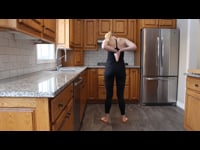
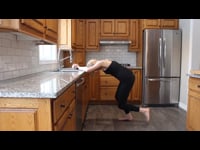
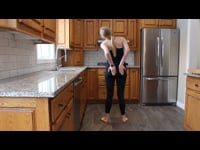
Face the Day: Full Body
-
Face the Day: Pelvic
-
Face the Day: Whole Body (No Music)
-
Post-Exercise Savasna
-
Breathing Qi Gong
-
Yin for Sleep


Patient education included in this course
-
24 Hour Fitness - 23 and 1/2 Hours
This course has exercises. Can I prescribe them to my patients?
Yes, exercises included in courses or resource packages on Embodia can be prescribed directly through the Embodia platform. A Tier 2 or 3 Membership is required to prescribe exercises. These memberships include a range of other features. You can learn about home exercise programs (HEP) on Embodia here, and about memberships on Embodia here.
This course has patient education. Can I share it with my patients?
Yes, patient education included in courses or resource packages on Embodia can be shared directly through the Embodia platform. A Tier 2 or 3 Membership is required to share education. These memberships include a range of other features. You can learn about patient education on Embodia here, and about memberships on Embodia here.
Is a certificate of completion included with this course?
Once you have completed the course, a certificate of completion (including learning hours and course information) will be generated. You can download this certificate at any time. To learn more about course certificates on Embodia please visit this guide.
This can be used for continuing education credits, depending on your professional college or association. If this course has been approved for CEUs in specific jurisdictions, it will be noted on the course page and CEU information may be added to your course certificate. Please read this guide for more information.
Is this course suitable if I'm new to pain science?
Yes. Carolyn and Brittany built this course to be accessible to clinicians at any stage — including new graduates who are just beginning to explore pain science and biopsychosocial approaches. That said, you will get more out of it if you come with at least a basic familiarity with the difference between nociceptive and central sensitization presentations. If you want to build that foundation first, Carolyn's other courses on Embodia cover those concepts in depth.
Who is most likely to benefit from telerehabilitation, based on what this course teaches?
One of the course's key clinical takeaways is that patients presenting with central sensitization, high psychosocial distress, catastrophization, or persistent pain may actually be among your best candidates for virtual care — not your worst. This course explains the reasoning behind that, and gives you the screening tools to identify those patients and adapt your approach accordingly.
Want to see telerehab assessment in action before you commit?
Carolyn has also recorded two live telerehab consultations alongside physiotherapist Darryl Yardley — a spinal case and a peripheral joint case — available as a companion resource on Embodia, free for members. Watching a real assessment unfold is a great way to get a feel for the clinical approach taught in this course. Watch the Telerehab Assessments here.