
Level 1b - Assessment of Posture Control: Clinical Skills Labs
Level 1b - Assessment of Posture Control: Clinical Skills Labs
This course includes
The instructors
Overview
BET PhysioPilates is a progressive, systematic therapeutic exercise system based on the Pilates method that follows the theoretical and scientific principles of re-training trunk stability, biomechanical balance and the neuromuscular control of posture and movement. Re-training is guided by the principles of motor control and motor learning theory.
Disrupted neuro-motor control associated with pain, poor posture or altered biomechanics is a component of many chronic or recurring clinical conditions seen by physiotherapists.
Musculoskeletal pain syndromes are evaluated in the context of the body functioning as an integrated muscle and movement system, with the control centered in the trunk.
This course is designed to address specific imbalances in neuromuscular control inherent in musculoskeletal dysfunction, facilitating the restoration of balanced posture, trunk stability, and pain-free movement.
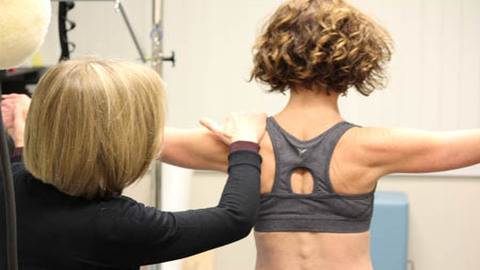
You will be required to develop competence with assessment techniques that highlight neuromuscular dysfunction and will also benefit from an appreciation of your own Posture Control!
Course Aims
To introduce the BET Pilates system; its theoretical and scientific base and its application to physiotherapy interventions
- To introduce a clinical reasoning process for Pilates-based therapeutic exercise interventions
- To facilitate an evidence-based approach to clinical practice
- To provide a framework from which to develop training progressions onto the Pilates apparatus
- To provide a basic framework for the systematic assessment of postural control and directly correlating with treatment intervention
- To present basic trunk and limb-girdle (mat) exercises and key exercise training concepts, adapted from the Pilates Method as a mechanism for:
- lumbar - pelvic stabilization and postural control in the lower quadrant
- cervicothoracic stabilization and postural control in the upper quadrant
- To focus on treatment intervention via Pilates-based therapeutic exercise and the assessment and re-education of neuromuscular control
Learning Objectives
In this online physiotherapy course, the participant will:
- Learn a systematic approach to assess for muscular and skeletal imbalances associated with static and dynamic posture
- Learn a systematic approach to evaluate basic imbalances in neuromuscular performance and bio-mechanics
- Utilise assessment findings and a clinical reasoning process to generate a treatment plan based on Pilates-based therapeutic exercise
- Practice Pilates-based neuromuscular treatment interventions and correlate to assessment findings and evaluate the outcome
Audience
Physical medicine professionals interested in motor control and neuromuscular imbalances and in learning and integrating a Pilates-based approach into their practice to improve patient outcomes.
The instructors

B.A. (P.E.), B.Sc.P.T., M.Sc.
Rochenda is a Physiotherapist and graduated from the University of Toronto. Additionally, she holds a B.A. in Physical Education (University of Western Ontario) and an M.Sc. Research degree in Rehabilitation Therapy (Queens University, Canada).
Rochenda has a special interest in muscle function and motor learning and in how biomechanical and muscle / movement imbalances contribute to painful conditions. She has continued to pursue this passion for more than 25 years, focusing exclusively on the development of a PILATES–based Physiotherapy treatment system. While living in Hong Kong Rochenda had the privilege to work extensively with Julia Ellis (RBS (TTC), FISTD, ARAD), a gifted ballet teacher, choreographer and Pilates ‘guru’ and together they founded the successful BET Pilates Centre in 1994. They were the first to introduce Pilates in Hong Kong and East Asia and the first in the region to offer an exclusively Pilates –based Physiotherapy approach. In 2013, Rochenda returned to her native Toronto and established a small PhysioPilates clinic in the West- end where she continues to maintain a full-time practice. In 2006, Rochenda published the first rigorously designed research study on a Pilates - based physiotherapy intervention, the results of this study presented at several conferences internationally.
Rochenda is a passionate educator having co-developed the BET Pilates training curriculum and she has been active internationally teaching and mentoring Physiotherapists in this system since 1996.
In her spare time, Rochenda enjoys competitive swimming, outdoor activities, cycling, travel, spending time with her two daughters and a good espresso.
Contact Information: betphysiopilates.com; (647) 748-1889; rochenda@betphysiopilates.com
Material included in this course
-
Welcome and Resources
-
Welcome and Important Notes for this section
-
INTRODUCTION TO 1b: ASSESSMENT OF NEUROMUSCULAR CONTROL FOR PILATES BASED TREATMENT INTERVENTIONS
-
Assessment Outline
-
BET Level 1 Exercise Worksheet. accessory equipment
-
Assessment of Mechanical Mechanisms: Lower Quadrant
-
Lab 1: Standing Posture Analysis: PELVIS; Positional Alignment / Resting Muscle Tone
-
Assessment Outline
-
Assessment Form
-
Assessment Form.Teaching Tool
-
Posture Evaluation worksheet. Lower Quadrant
-
Length-Tension worksheet. Lower Quadrant
-
Assessment of Neurological Mechanisms: Lower Quadrant
-
Lab 2: Static Posture Control Analysis: PELVIS
-
Lab 3: Dynamic Posture Control Analysis: PELVIS
-
NM Performance worksheet. Lower Quadrant
-
Assessment of Mechanical Mechanisms: Upper Quadrant
-
Lab 4: Posture Analysis: SCAPULA; Positional Alignment / Resting Muscle Tone
-
Posture Evaluation worksheet. Upper Quadrant
-
Assessment of Neurological Mechanisms: Upper Quadrant
-
Lab 5: Static Posture Control Analysis: SCAPULA
-
Lab 6: Dynamic Posture Control Analysis: SCAPULA
-
NM Performance worksheet. Upper Quadrant
-
Posture Control: Assessment Demonstration
-
Lab 7: Lower Quadrant: Assessment Demonstration and Review
-
Lab 8: Upper Quadrant: Assessment Demonstration and Review
-
Feedback
What is BET PhysioPilates?
BET PhysioPilates is a progressive, Pilates-based therapeutic exercise system designed to retrain trunk stability, improve biomechanical balance, and restore neuromuscular control of posture and movement. It is grounded in principles of motor control, motor learning, and neuromuscular function, with exercises supported by scientific and clinical rationale.
You can find an introduction to the BET PhysioPilates system by clicking on the titles of the courses below:
- An Introduction to the BET PhysioPilates System (Free for Embodia Members)
- In the Studio with the BET PhysioPilates Treatment System (Free for Embodia Members)
Can I purchase this course individually?
No, this course is only available as part of the BET PhysioPilates Level 1 Bundle. This bundle includes four courses and one resource package. If you have any questions about the content or what’s included, please contact the instructor at rochenda@betphysiopilates.com.
Is a certificate of completion included with this course?
Once you have completed the course, a certificate of completion (including learning hours and course information) will be generated. You can download this certificate at any time. To learn more about course certificates on Embodia please visit this guide.
This can be used for continuing education credits, depending on your professional college or association. If this course has been approved for CEUs in specific jurisdictions, it will be noted on the course page and CEU information may be added to your course certificate. Please read this guide for more information.